
Agenda
Two days of insights, innovation, and hands-on learning — all focused on real-world Model Based Definition.
Agenda 2026
The full program for MBE Forum 2026 will be published soon. Companies like Hitachi, Rolls-Royce, Wärtsilä, Vestas, Sandvik, Siemens will be presenting at the conference. This year’s forum will once again bring together leading experts and industry professionals to explore the latest developments in Model Based Definition (MBD), digital engineering, and manufacturing innovation.
Over two days, participants can look forward to:
-
Inspiring keynotes from international thought leaders
-
Technical sessions and case studies from leading companies
-
Workshops on tools, methods, and best practices
-
Valuable opportunities for networking and knowledge exchange
Stay tuned — the detailed agenda will be announced shortly.
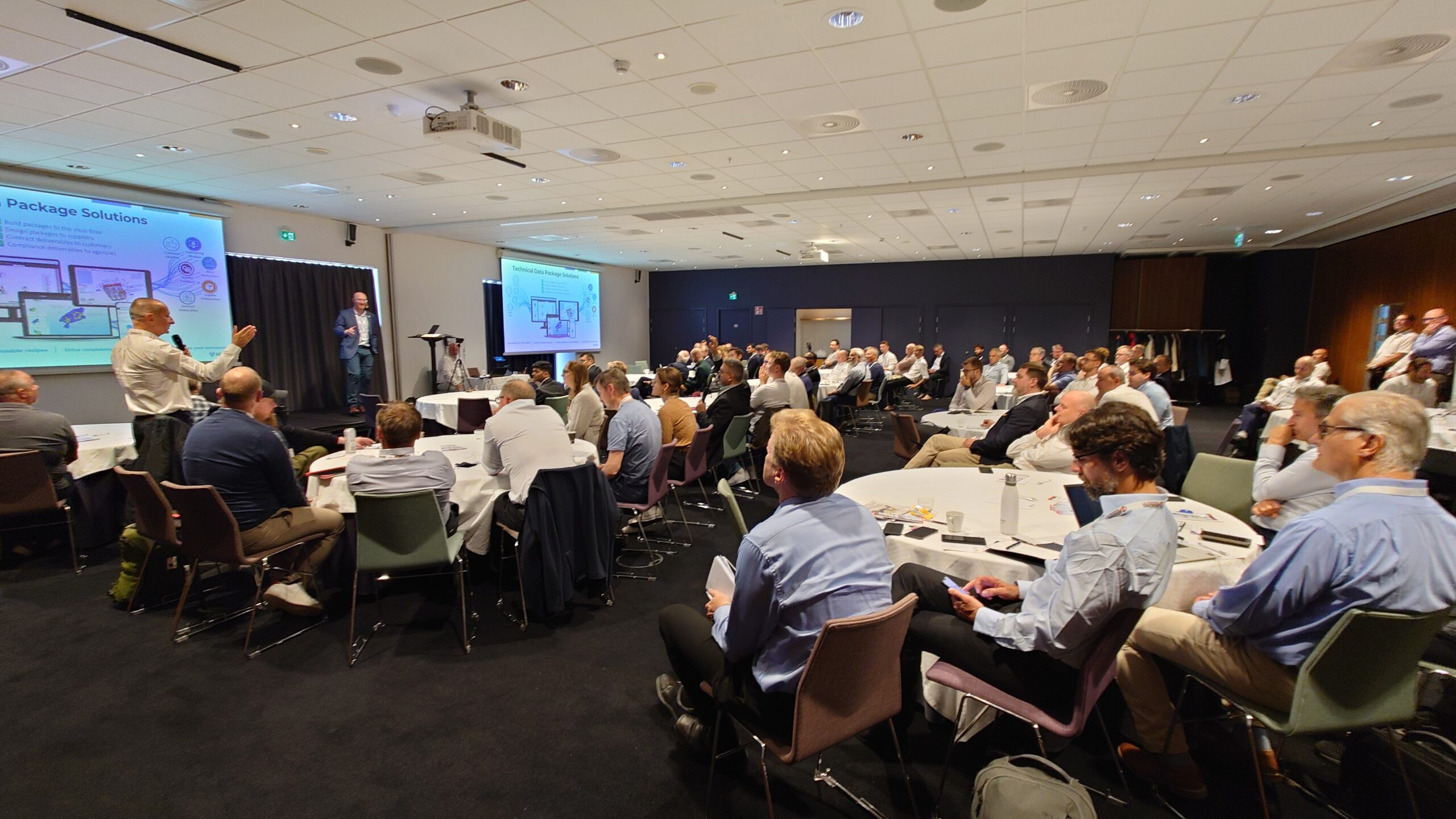
Want to see what last year’s event looked like?
Keynotes
MBD, Who’s Thread is it?
David Hook, Rolls-Royce
Discover how Rolls-Royce is advancing the aerospace industry through the adoption of Model Based Definition. This keynote explores existing adoption, continual development and challenges associated with integrating MBD through the perspective of a thread.
Using a case study to explain how establishing connections and information pipelines across the product lifecycle can unlock efficiency, support innovation, and enhance collaboration
Sharing our experience of implementation we offer lessons and strategies used to develop this capability across the supply chain and how organisations may adopt them.
The insights from Rolls-Royce’s experience into the organizational and technological shifts are foundational to transformation, as is understanding the pivotal role that digital connectivity has across an enterprise and its supporting supply chain. We will discuss the opportunities and strategic value these approaches create for safety-critical, complex engineering environments.
Scaling Model-Based Definition:
Driving Enterprise Adoption and Unlocking Cross-Engineering Value
Dennys Gomes, Vestas
Building on previously presented foundations of Model-Based Definition (MBD), this work focuses on the practical scaling of MBD across a large engineering organization. Moving beyond initial implementation, the focus shifts to driving enterprise-wide adoption through disciplined CAD methodologies, robust design governance, and structured onboarding of engineers and suppliers. By mandating MBD for all new designs and Form-Fit-Function changes, a significant cultural and operational transformation is achieved. This enables consistent, high-quality Product Manufacturing Information (PMI), reducing manual CAD–FEA data transfer and unlocking broader reuse of engineering data. The result is a scalable digital thread that extends MBD benefits beyond manufacturing into simulation and across the full value chain.
Presentations
Unlocking MBE: Our Path from Concept to Implementation
Fredrik Montelius, Hitachi Energy Components
This presentation describes the implementation of Model-Based Definition (MBD) as a foundation for a Model-Based Enterprise. It covers the reasons behind the initiative, the approach used to transition from drawing-based documentation to model-based product definition, and the key steps taken from pilot projects to broader deployment. The presentation focuses on practical experiences and challenges related to process transformation, model quality, organizational adoption, and integration with existing workflows. It also looks ahead to the next stages of the journey, outlining future priorities and the continued development of a more connected, efficient, and model-based way of working supported by a stronger digital thread.
rubypoint – Characteristic Management: The Missing Layer in Model-Based Enterprise
Daniel Campbell, rubypoint
PLM systems typically manage product data at the part level—such as part numbers, revisions, and bills of materials. However, the underlying characteristics and geometric features remain largely unmanaged across enterprise systems.
This session introduces characteristic management as a key concept, treating characteristics as first-class enterprise objects. It presents practical approaches based on MBD, the DMSC Model-Based Characteristics (MBC) standard, and the Quality Information Framework (QIF).
ASME Standard – Latest Updates on MBD Activities
Fredric Constantino, ASME
ASME continues to develop and modernize standards for model-based operations. The MBE Standards Committee and the MBE & Y14 Harmonization Committee are actively supporting the evolution of MBD and digital datasets.
This session provides updates on ongoing activities, including collaboration with ISO TC 10 to harmonize standards such as ASME Y14.41, Y14.47, and ISO 16792, as well as guidance on how to get involved.
MBD Implementation @ Wärtsilä
Franco Cavressi, Wärtsilä
Franco will present on Wärtsilä’s current MBD implementation and their future plans.
Create Your MBD Workflow in your CAD System
Karl-Henrik Ryttersson, ARIADNE Engineering
Defining product requirements in a clear, unambiguous, and semantic way is essential to capture product functionality and enable downstream MBD processes.
This session explores how standardized MBD workflows can support automation in quality control, tolerance analysis, and Technical Data Package (TDP) creation, based on real-world implementation experience.
Siemens – Industry leading MBE with Designcenter
George Rendell, Siemens
Siemens will present their interesting solution for support of MBE processes.
Designcenter NX for PMI, MBE, and Characteristics will be presented.
Model-Based Characteristics: PC Tags, UUIDs and Digital Augmentations
Mark Nielsen, TechAzul
How MBC and digital augmentations enable structured inspection and traceability.
Mapping Your Way to a Model-Based Implementation
Dan Feighery, Action Engineering
Before embarking on your model-based journey, understand the art of the possible when model-based definition establishes the foundation of a model-based enterprise. Focusing on how MBD data elements flow throughout business processes minimizes risk and subjectivity while maximizing the efficiencies of connected data and automated workflows in a model-based implementation.
By identifying information needs and mapping the pathway of current data consumption throughout the product realization lifecycle, organizations can use their existing processes as a blueprint to close gaps and establish the digital thread of their model-based future state.
Design for Manufacturability & Cost in Future MBE & AI Design
Leo Broers, Coresy
AI and MBE improving manufacturability and cost efficiency.
Sandvik, From Design to Verification — simplifying manufacturing with Sandvik Manufacturing Lifecycle Management
Fredrik A Svensson, Sandvik
Model-Based Enterprise promises one continuous thread from design to verification, anchored in Model-Based Definition — the 3D model carrying full product definition, PMI, tolerances, through every stage of the lifecycle. In practice that thread breaks. PMI gets re-interpreted at each handoff. Inspection results come back as PDFs, detached from the features they measured. The digital thread exists on paper, but too often breaks down where it matters most.
This is where Sandvik works. Sandvik Manufacturing Lifecycle Management simplifies the chain by carrying MBD and persistent feature IDs from CAD through CAM, machining, and inspection as one governed intelligence layer between PLM and the shop floor. Not another point solution — the link that keeps design intent traceable to every cut and every measurement, so the feedback loop can actually close. There are fewer systems to reconcile, and more decisions are made on data. A manufacturing process that scales because it’s simple enough to automate, and agnostic enough to adopt at every stage of manufacturing value chain.
Together with Metrologic DCS, Sandvik is bringing this to life, starting with Inspection Flow. This talk is an honest look at the challenges that shaped the architecture, the decisions behind it, and the early lessons from closing the loop between engineering and production.
Sponsor Presentations
Capvidia’s Holistic MBD Approach
Aleksa Dopudja, Capvidia
Discover how MBD is transforming industries such as aerospace, automotive, and consumer goods through case studies demonstrating improved collaboration and operational efficiency.
Model-Based Enterprise & Mechanical Variation Management
Ed Walsh, Sigmetrix
This session explores how manufacturers are building a digital thread connecting requirements, engineering, manufacturing, and quality. It also provides practical insights into benefits, required investments, and common challenges based on real-world experience with global organizations.
Content-Based Collaboration: Bridging the Collaboration Gap
Patrick Dunfey, ANARK
When model-based data moves beyond engineering, many organizations face a “collaboration gap.” This session explores how to unlock the full value of MBD by making product data secure, accessible, and actionable across the enterprise—enhancing supplier collaboration, reducing errors, and enabling the digital thread.
MBD-Based Quality
Henrik Dahlgren, OGP Scandinavia AB
Explore advanced model-based methods that enhance interoperability and feedback loops between manufacturing and quality, ensuring consistency, precision, and process alignment.
MBD – The beauty and benefits of color coding …. and beyond
Jan Stothfang, B&W Software GmbH
In this session you will learn how color coding (powered by SmartMBDTools for Creo) will help to easily (automatically) apply PMI to surfaces and reliably provide that information to dedicated downstream consumers. This technique can be used within the Creo process chain as well as in a neutral interface driven process. It is not limited to the usage of visual color information, but can be extended to machine readable surface parameters and more.
Summary
This two-day forum brings together industry leaders and experts to share practical insights, case studies, and standards development within Model-Based Definition (MBD) and Model-Based Enterprise (MBE), with a focus on enabling the digital thread and driving measurable business value.
Secure Your Spot Today!
Don’t miss out on the opportunity to network and innovate. Register now to be part of this exciting event.

Common Questions
Find answers to your questions about the agenda, from session topics and timings to workshop details and daily schedules.
Yes. Depending on the package you select, you will have access to both conference presentations and the hands-on workshops. The Full Package includes both days and all workshop sessions.
Yes, workshop selection is done during registration. Some workshops run in parallel, so early sign-up is recommended to secure your spot.
Workshops focus on practical applications of MBD, including tolerance analysis, ISO GPS, metrology automation, and innovation techniques like TRIZ. You can choose sessions based on your interests and role.
Yes, registered participants will receive access to selected presentation materials and workshop summaries after the event.
Yes, coffee breaks, lunch, and the networking dinner (Day 1) are included in your registration, depending on the package you choose.
Minor updates may occur as we finalize speakers and sessions. The most current version of the agenda will always be available on this page.
